
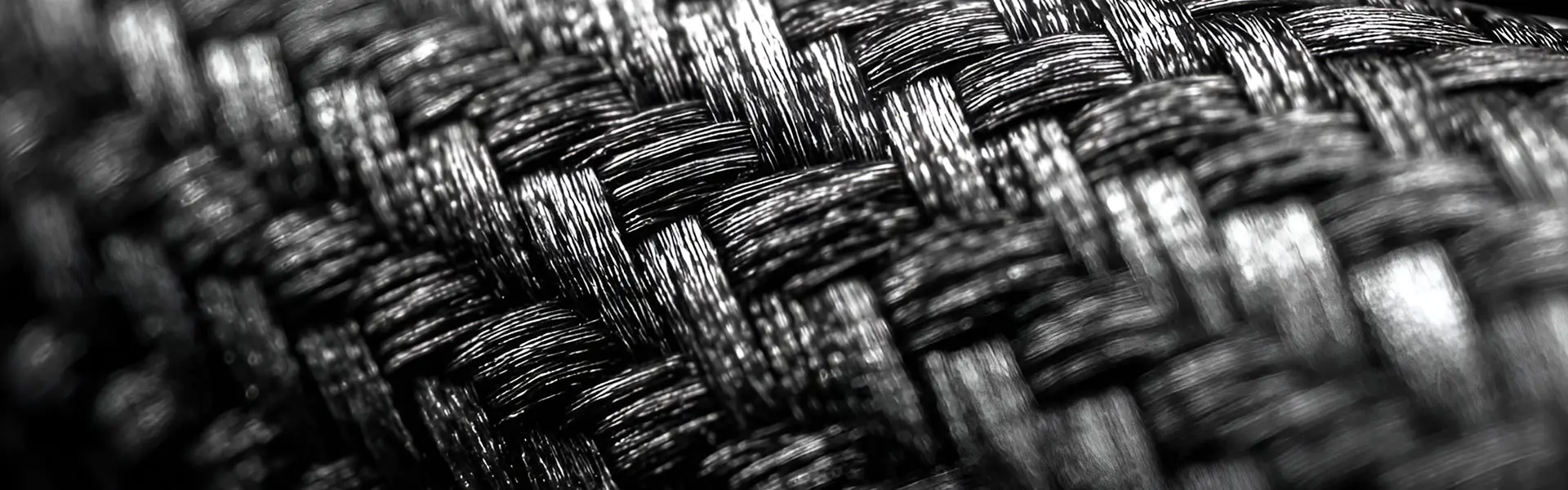
In the world of advanced composite materials and reinforcement solutions, one name stands out for its exceptional balance of strength, durability, and environmental resistance: Basalt Fiber. As a leading innovator, Kaxite is at the forefront of manufacturing and supplying premium-grade basalt fiber products for a global market. This remarkable material, born from molten volcanic rock, offers a superior alternative to traditional materials like fiberglass and carbon fiber in numerous demanding applications. Its unique properties stem directly from its natural origin, providing a combination of mechanical performance, thermal stability, and chemical inertness that is difficult to match with synthetic alternatives. Industries ranging from construction and automotive to aerospace and marine are increasingly turning to basalt fiber for its reliability and long-term cost-effectiveness.
Basalt fiber is a continuous filament produced through an intricate process of melting crushed basalt rock at approximately 1,400°C to 1,600°C (2,552°F to 2,912°F) and extruding it through specialized platinum-rhodium bushings. The result is a fine, continuous fiber with a diameter typically ranging from 9 to 24 microns. Unlike fiberglass, which is derived from silica sand, or carbon fiber, which originates from organic precursors, basalt fiber's raw material is an abundant, naturally occurring igneous rock. This gives Kaxite Basalt Fiber several inherent advantages, including a lower environmental footprint from production, excellent stability, and a composition free from secondary additives. The final product is a versatile reinforcement that can be woven into fabrics, chopped for use in composites, or assembled into rebar, meshes, and other structural forms.
To understand why Kaxite Basalt Fiber is a superior choice, it is essential to examine its core technical specifications. The following data highlights the material's standout characteristics compared to E-Glass fiber, a common benchmark.
| Property | Kaxite Basalt Fiber | Standard E-Glass Fiber | Advantage |
|---|---|---|---|
| Tensile Strength | 4,800 MPa (max) | 3,400 MPa (max) | ~40% Higher |
| Young's Modulus | 110 GPa | 72 GPa | ~53% Higher |
| Service Temperature | Up to 700°C | Up to 380°C | Far Superior |
| Alkali Resistance | Excellent (pH 13-14) | Poor | Ideal for Concrete |
| Moisture Absorption | < 0.1% | > 0.5% | More Stable |
| Thermal Conductivity | 0.035 W/m·K | 0.04 W/m·K | Better Insulation |
Kaxite Basalt Fiber exhibits outstanding resistance to a wide array of corrosive agents, making it invaluable in harsh environments. Its natural composition renders it highly inert.
Kaxite processes its high-quality basalt fiber into several key product forms to suit diverse industrial needs:
What are the main advantages of basalt fiber over fiberglass (E-Glass)?
Basalt fiber offers several key advantages: higher tensile strength and modulus, a much wider operating temperature range (up to 700°C), superior chemical and alkali resistance (crucial for concrete reinforcement), lower moisture absorption, and better environmental profile due to its single-material production from natural rock. It provides a longer service life in aggressive environments.
Is basalt fiber a suitable replacement for carbon fiber?
While not matching carbon fiber's ultra-high modulus in all cases, basalt fiber is an excellent alternative in many applications. It offers better strain to failure (less brittle), superior impact resistance, much better chemical and fire resistance, and a significantly lower cost. It is often considered a "bridge" material between glass and carbon, offering a superior performance-to-cost ratio for structural reinforcement, fire protection, and corrosion-resistant composites.
How sustainable or eco-friendly is basalt fiber production?
The production of Kaxite Basalt Fiber is notably eco-friendly. The raw material (basalt rock) is abundant and requires no mining additives. The melting process is a single-step operation with no secondary materials, resulting in lower energy consumption compared to fiberglass. It produces no toxic gases or waste, and the final product is non-toxic, recyclable, and possesses a natural resistance to decay, contributing to longer-lasting, more sustainable structures.
Can basalt fiber be used in concrete reinforcement?
Yes, this is one of its strongest applications. Kaxite Basalt Fiber Rebar and Mesh are specifically designed for concrete. Unlike steel, basalt is completely corrosion-resistant, eliminating spalling and structural weakness caused by rust. It is also non-magnetic and electrically insulating. Its exceptional alkali resistance ensures long-term durability within the high-pH environment of concrete, making it ideal for bridges, marine structures, roadways, and chemical plants.
What are the limitations or considerations when using basalt fiber?
Primary considerations include cost, which is higher than standard E-glass but lower than carbon fiber. Designers must also understand its specific bonding characteristics with different resin matrices (polyester, epoxy, vinyl ester) to optimize performance. While strong in tension, specific joint and connection designs for structural elements like rebar may differ from steel. Availability in specialized weaves or forms may require consultation with a specialist supplier like Kaxite.
How does the cost of basalt fiber composites compare?
The total lifecycle cost of a basalt fiber composite component is often lower than alternatives. While the upfront material cost is higher than fiberglass, its superior durability, corrosion resistance, and reduced maintenance lead to significant savings over time. When compared to carbon fiber, basalt offers substantial cost savings for applications where the ultra-high stiffness of carbon is not absolutely critical, providing an economically attractive high-performance solution.
In which industries are Kaxite Basalt Fiber products most commonly applied?
Kaxite products serve a wide range of industries: Construction (concrete reinforcement, structural retrofitting, fireproof fabrics); Automotive & Transportation (lightweight composite parts, brake pads, heat shields); Marine (boat hulls, decks, corrosion-resistant fixtures); Aerospace (interior panels, composite components); Industrial (insulation for high-temperature pipes, filtration fabrics, corrosive chemical handling); and Wind Energy (reinforcement for turbine blades).


