
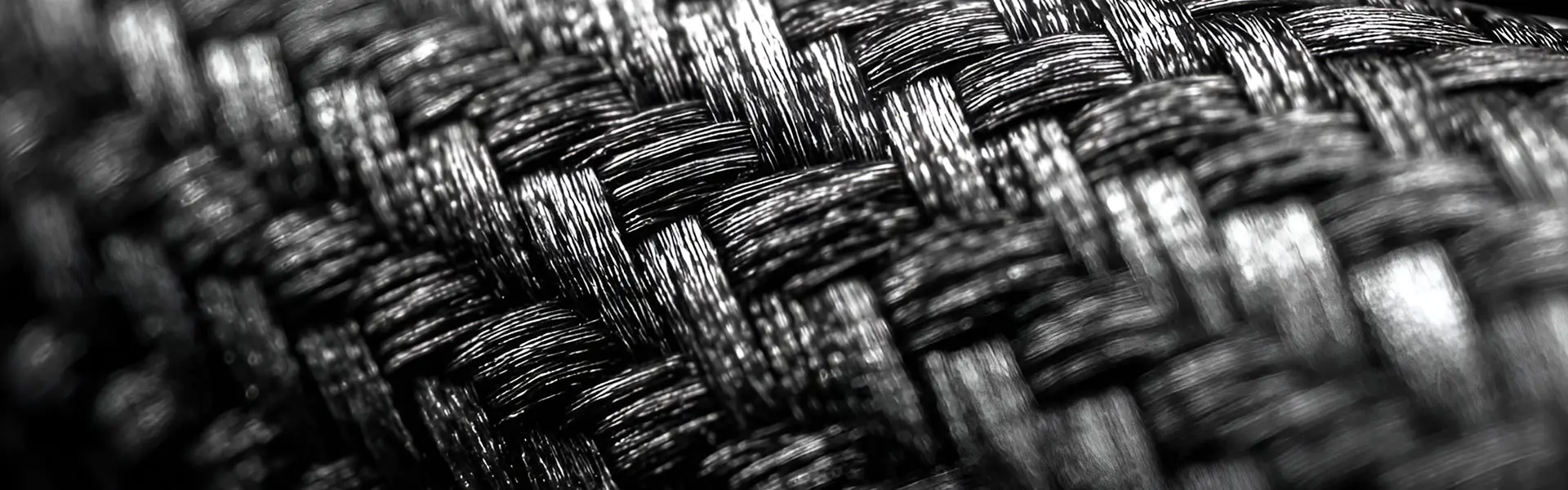
Carbon fiber is a high-strength, lightweight composite material consisting of thin, crystalline filaments of carbon. These fibers, thinner than a human hair, are bundled together to form a tow and combined with a polymer resin matrix (like epoxy) to create a rigid and incredibly strong composite material. The resulting composite offers an exceptional strength-to-weight ratio, surpassing that of steel while being significantly lighter. This unique combination of properties has revolutionized industries from aerospace and automotive to sporting goods and consumer electronics, enabling the creation of products that are both stronger and more efficient.
At Kaxite, we don't just supply carbon fiber; we engineer performance. Our commitment lies in pushing the boundaries of material science to deliver carbon fiber composites that meet the most demanding specifications. We control the process from precursor to finished composite, ensuring unmatched consistency, quality, and reliability. Whether you are a manufacturer in the motorsports industry seeking the ultimate in chassis rigidity or a designer creating the next generation of premium consumer products, Kaxite provides the material solutions and technical expertise to turn innovative concepts into reality.
Our product range is distinguished by several key advantages:
Our standard product line is designed to cover a broad spectrum of industrial and performance applications. The following tables detail the key parameters of our most popular carbon fiber fabric weaves and composite laminate properties.
| Product Code | Weave Style | Areal Weight (g/m²) | Fiber Type | Thread Count (warp x weft) | Typical Thickness (mm) | Primary Applications |
|---|---|---|---|---|---|---|
| KX-CF-200 | Plain Weave | 200 | Standard Modulus (SM) | 12K x 12K | 0.25 | Consumer electronics casings, interior panels, drone arms |
| KX-CF-280 | 2x2 Twill | 280 | Intermediate Modulus (IM) | 6K x 6K | 0.35 | Automotive body parts, sporting equipment, luggage |
| KX-CF-400 | 5-Harness Satin | 400 | High Modulus (HM) | 3K x 3K | 0.50 | Aerospace components, high-performance automotive, competition bicycle frames |
| KX-CF-600UD | Unidirectional Tape | 600 | Ultra-High Modulus (UHM) | Unidirectional | 0.60 | Racing car monocoques, aircraft spars, robot arms (where load direction is primary) |
| Property | Test Standard | KX-CF-280 (IM Epoxy Laminate) | KX-CF-400 (HM Epoxy Laminate) | KX-CF-600UD (UHM Epoxy Laminate) |
|---|---|---|---|---|
| Tensile Strength | ASTM D3039 | 750 MPa | 900 MPa | 1200 MPa |
| Tensile Modulus | ASTM D3039 | 70 GPa | 150 GPa | 220 GPa |
| Compressive Strength | ASTM D6641 | 600 MPa | 720 MPa | 850 MPa |
| Flexural Strength | ASTM D7264 | 800 MPa | 950 MPa | 1100 MPa |
| Density | ASTM D792 | 1.55 g/cm³ | 1.60 g/cm³ | 1.65 g/cm³ |
*Properties are for a quasi-isotropic laminate ([0/90/±45]s) unless otherwise noted (UD tape is unidirectional). Values are typical and can vary with specific resin system and cure cycle.
What exactly is carbon fiber made from?
Carbon fiber begins as a precursor, most commonly polyacrylonitrile (PAN) or pitch. The precursor fibers undergo a series of high-temperature treatments in controlled atmospheres: first stabilization (oxidation), then carbonization (where non-carbon atoms are driven off), and sometimes graphitization for higher modulus. This process leaves behind long, tightly aligned chains of carbon atoms, resulting in the high-strength filament. At Kaxite, we source premium-grade PAN precursor to ensure the highest quality fiber output.
How does the weight of carbon fiber compare to steel or aluminum?
Carbon fiber composites are remarkably lightweight. They are approximately 40-50% lighter than aluminum of comparable strength and about 60-70% lighter than steel. For example, a Kaxite carbon fiber laminate with a density of 1.6 g/cm³ provides strength greater than many steel alloys, which have densities around 7.8 g/cm³. This weight savings is critical for applications where reducing mass directly improves performance, efficiency, or battery life.
Is carbon fiber stronger than steel?
In terms of specific strength (strength divided by density), carbon fiber composites are vastly superior to steel. While high-strength steel may have a higher absolute tensile strength in some cases, carbon fiber achieves equivalent or greater strength at a fraction of the weight. Furthermore, its stiffness (modulus) can be engineered to be much higher. Kaxite's high-modulus fabrics, like our KX-CF-400 series, offer exceptional rigidity for demanding structural applications.
What are the main disadvantages or limitations of carbon fiber?
The primary considerations are cost and impact behavior. The raw materials and manufacturing processes are more expensive than for metals. Carbon fiber composites can be brittle and may suffer from localized impact damage (like delamination) that isn't always visible, unlike the ductile denting of metal. It also requires careful design to account for anisotropic properties (strength varies with direction) and can be challenging to repair. Kaxite provides extensive design consultation to help mitigate these factors from the outset.
What does "modulus" mean in carbon fiber (e.g., Standard, Intermediate, High)?
Modulus refers to the material's stiffness or resistance to deformation under load. A higher modulus means the fiber is less stretchy and more rigid. Standard Modulus (SM) fibers offer a great balance of strength and cost. Intermediate Modulus (IM) and High Modulus (HM) fibers, like those used in Kaxite's premium products, provide increased stiffness for applications where minimal flex (like in aerospace structures or high-end sporting goods) is critical. Ultra-High Modulus (UHM) fibers offer the highest level of stiffness.
Can carbon fiber be recycled?
Recycling thermoset carbon fiber composites is challenging because the cured resin cannot be easily melted and reshaped. However, processes like pyrolysis (burning off the resin in a low-oxygen environment) can recover the carbon fibers for reuse in non-structural applications. Kaxite is actively involved in research for more sustainable composite lifecycle solutions, including exploring thermoplastic resin systems which are more readily recyclable.
How do I choose the right carbon fiber weave for my project?
The choice depends on the desired balance of mechanical properties, surface finish, and drapeability (how well it conforms to complex shapes). A plain weave is stable and offers a classic checkerboard look. A twill weave (like 2x2) has better drape and a distinctive diagonal pattern. A unidirectional tape places all fibers in one direction for maximum strength along that axis. For complex, high-performance parts, multiple layups are combined. The engineers at Kaxite can analyze your design requirements and recommend the optimal material stack-up.
What is pre-preg carbon fiber, and does Kaxite offer it?
Pre-preg (pre-impregnated) carbon fiber is fabric or tape that has been pre-coated with a precise amount of partially cured (B-staged) resin. This ensures perfect resin-to-fiber ratio, eliminates manual resin application, and is essential for aerospace-grade components. Yes, Kaxite offers a full range of pre-preg materials, which require refrigeration and are cured under specific heat and pressure cycles (often in an autoclave) to achieve the highest possible performance and consistency.
The versatility of Kaxite carbon fiber enables breakthroughs across diverse sectors. Our materials are trusted by leading companies to enhance product performance.
Engaging with Kaxite means partnering with experts dedicated to your project's success. Our collaborative process ensures you get the right material for the job.


