
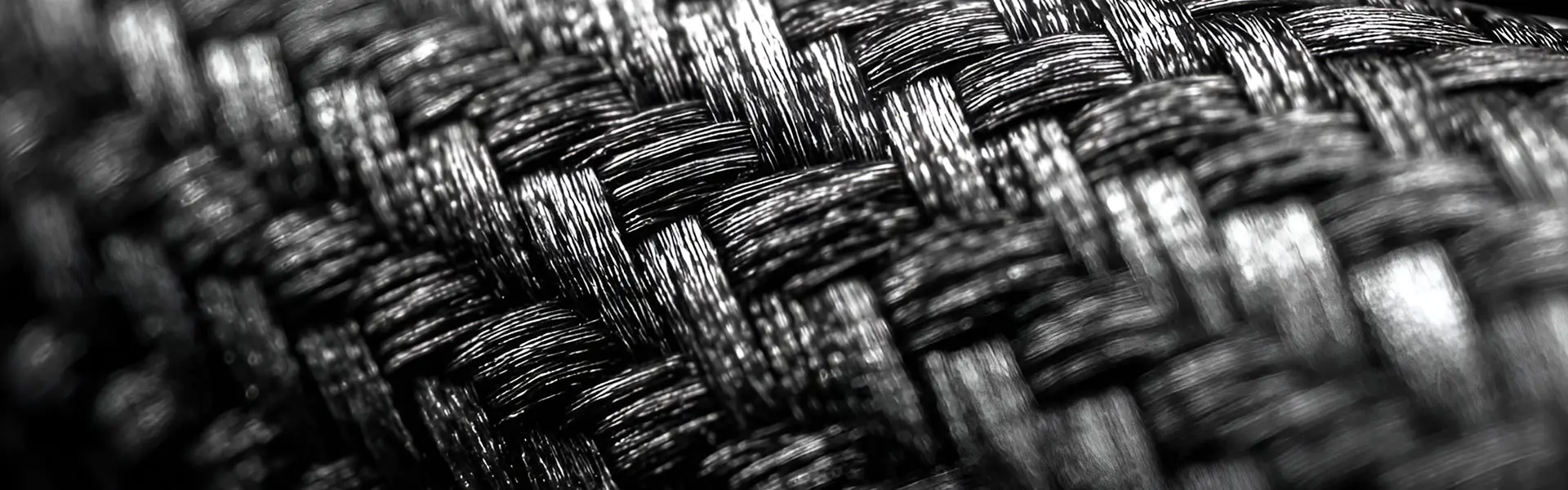
In the world of advanced materials, Glass Fiber stands out as a cornerstone of modern engineering and manufacturing. For decades, this versatile reinforcement material has empowered industries to create stronger, lighter, and more durable products. At Kaxite, we have dedicated ourselves to mastering the art and science of glass fiber production, delivering high-performance materials that meet the rigorous demands of global markets. This guide delves deep into the specifications, applications, and advantages of our premium glass fiber products.
Glass fiber, also known as fiberglass, is a material consisting of numerous extremely fine fibers of glass. It is produced by drawing molten glass into strands, which are then bundled together to form yarns, rovings, fabrics, or mats. These forms serve as reinforcement in composite materials, most commonly with polymer resins, to create a strong, lightweight, and corrosion-resistant material known as Fiber-Reinforced Plastic (FRP) or Glass-Reinforced Plastic (GRP). The unique properties of glass fiber stem from its composition and manufacturing process, resulting in a product with an exceptional strength-to-weight ratio, dimensional stability, and excellent electrical insulation properties.
Understanding the technical specifications is crucial for selecting the right material for your project. Kaxite offers a comprehensive range of glass fiber products, each engineered for specific performance criteria. Below are the detailed parameters for our standard E-Glass fiber, the most widely used type for general-purpose reinforcement.
| Product Form | Standard Weight/Size | Tex (g/1000m) | Typical Applications |
|---|---|---|---|
| Direct Roving | 1kg, 5kg, 20kg per package | 1200, 2400, 4800 | Pultrusion, filament winding, weaving |
| Chopped Strand Mat (CSM) | 300g/m², 450g/m², 600g/m² | N/A | Hand lay-up, resin infusion, marine hulls |
| Woven Roving Fabric | 500g/m², 800g/m² | N/A | Boat building, truck panels, large structural parts |
| Single-End Roving | 1kg, 2kg per bobbin | 1100, 2200 | Sheet molding compound (SMC), thermoplastics |
| Chopped Strands | 3mm, 4.5mm, 6mm, 12mm lengths | N/A | Reinforcement for thermoplastics, BMC, coatings |
The performance of glass fiber in a composite is heavily dependent on the chemical interface between the fiber and the resin matrix. This is governed by the "sizing" or "coupling agent" applied during manufacturing. Kaxite offers a variety of sizings tailored for compatibility with different resin systems:
| Sizing Code | Compatible Resin System | Key Benefits |
|---|---|---|
| KX-110 | Unsaturated Polyester, Vinyl Ester | Excellent wettability, high mechanical strength, fast processing. |
| KX-210 | Epoxy | Superior interfacial adhesion, enhanced fatigue resistance. |
| KX-310 | Polypropylene, Nylon, PBT | Optimized for thermoplastics, improves dispersion and impact strength. |
| KX-410 | Phenolic, Polyurethane | High heat resistance, low smoke toxicity for transport applications. |
The adaptability of glass fiber makes it indispensable across numerous sectors. Kaxite's high-quality fibers are trusted by manufacturers worldwide in the following key industries:
Q: What is the difference between E-Glass and S-Glass?
A: E-Glass is the standard, most economical type, offering good strength and excellent electrical insulation. S-Glass (or R-Glass) has a higher silica content, providing approximately 30-40% higher tensile strength, 15-20% higher modulus, and better temperature resistance. It is used in aerospace, ballistic armor, and high-performance sporting goods where maximum mechanical properties are required, albeit at a higher cost.
Q: How does glass fiber compare to carbon fiber?
A: Glass fiber is less stiff and strong than carbon fiber but is significantly more cost-effective and has better impact resistance (less brittle). It also offers better elongation (more ductile failure) and is non-conductive, whereas carbon fiber is electrically conductive. The choice depends on the application's priority: ultimate performance (carbon) vs. cost-effective, reliable strength (glass).
Q: What are the key factors affecting the final strength of a glass fiber composite part?
A: The final strength depends on several interrelated factors: the inherent strength of the glass fiber itself, the type and quality of the polymer resin, the adhesion at the fiber-resin interface (determined by the sizing), the fiber content (volume fraction), the orientation of the fibers (aligned vs. random), and the manufacturing process quality (void content, curing conditions).
Q: Is glass fiber material resistant to chemicals and corrosion?
A: Yes, one of the primary advantages of glass fiber reinforced plastics (GRP) is their outstanding corrosion resistance. Unlike metals, they do not rust or corrode when exposed to water, salts, acids, or alkalis. For highly aggressive chemical environments, specialized resin systems (like vinyl ester or furan) combined with C-Glass fibers are used for superior chemical resistance.
Q: Can Kaxite glass fiber be used for high-temperature applications?
A: Standard E-Glass fibers retain about 50% of their strength at 370°C (700°F) for short periods, but the limiting factor is usually the polymer resin matrix, which degrades at much lower temperatures (typically 150-220°C for epoxies and polyesters). For sustained high-temperature use, high-temperature resins (e.g., phenolic, polyimide) or inorganic matrices must be used. The glass fiber itself has a softening point around 846°C.
Q: What are the storage and handling recommendations for glass fiber products?
A: Glass fiber products should be stored in a cool, dry environment in their original, unopened packaging to prevent moisture absorption, which can degrade performance. The ideal storage temperature is between 10°C and 25°C (50°F and 77°F) with relative humidity below 65%. Once opened, material should be used promptly. Handle with care to avoid skin irritation by wearing appropriate gloves and protective clothing.
Q: Does Kaxite offer customized glass fiber solutions?
A: Absolutely. While we provide a wide range of standard products, Kaxite specializes in developing customized solutions. We can tailor filament diameter, roving tex, strand length, and most importantly, the chemical sizing formulation to achieve optimal compatibility and performance with your specific resin system and manufacturing process. Contact our technical team to discuss your project requirements.


