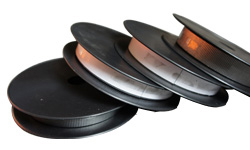

Gasket tape is an indispensable sealing solution across countless industries, offering a precise, clean, and highly effective method for preventing leaks, dampening vibration, and protecting against environmental contaminants. Unlike traditional pre-cut gaskets, gasket tape provides unparalleled flexibility, allowing for custom application on any shape or surface directly at the point of assembly. At Kaxite, we have refined the science of high-performance sealing tapes, engineering our products to meet the rigorous demands of automotive, aerospace, electronics, plumbing, and general manufacturing applications. This guide delves deep into the specifications, selection criteria, and application best practices for professional-grade gasket tape.
The performance of any gasket tape is fundamentally determined by its base material. Kaxite offers a range of advanced polymer and composite materials, each selected for specific property profiles.
Understanding the technical parameters is key to selecting the correct Kaxite gasket tape for your project. Below is a detailed breakdown of essential specifications.
| Parameter | Description | Typical Range (Kaxite Products) | Importance for Selection |
|---|---|---|---|
| Thickness | The nominal depth of the uncompressed tape. | 0.8mm (1/32") to 6.4mm (1/4") | Determines the gap-filling capability. Must be greater than the maximum flange gap to ensure proper compression. |
| Width | The dimension of the tape as it comes off the roll. | 3mm (1/8") to 50mm (2") standard; custom widths available. | Must be appropriate for the sealing surface area. Wider tapes distribute compression force over a larger area. |
| Density | Mass per unit volume, often expressed in lb/ft³ or kg/m³. | 15 to 40 lb/ft³ (sponge); Varies for solid materials. | Affects compressibility, recovery, and sealing force. Lower density sponges compress more easily. |
| Compression Set | The material's ability to return to its original thickness after prolonged compression (ASTM D395). | 5% to 25% (Lower % is superior) | Critical for long-term sealing performance. A low compression set ensures the gasket maintains seal over time and thermal cycles. |
| Tensile Strength | Force required to stretch the material to the point of breaking (ASTM D412). | 150 to 800 psi | Indicates durability and resistance to tearing during handling and installation. |
| Temperature Range | The continuous operating temperature interval the material can withstand without degrading. | -60°C to +260°C (-76°F to +500°F), material dependent. | Must encompass both the operational and ambient environmental temperatures of the application. |
| Adhesive Type | The pressure-sensitive adhesive (PSA) system coated on one side. | Acrylic, Rubber-Based, Silicone | Determines initial tack, ultimate bond strength, and environmental resistance. Acrylic offers the best overall aging; silicone for high temps. | Adhesive Thickness | Thickness of the adhesive layer, usually in mils. | 2 to 5 mils (0.05mm to 0.13mm) | A thicker adhesive coat can help accommodate minor surface irregularities for better bonding. |
Our product line is engineered into distinct series to simplify your selection process based on application requirements.
| Series Name | Core Material | Key Characteristics | Ideal Applications |
|---|---|---|---|
| Kaxite KX-Pro | High-Density Neoprene/EPDM Sponge | Superior compression set (<10%), high tensile strength, acrylic adhesive. UL94 HF-1 rated. | Electronics enclosures, control panels, outdoor machinery, automotive compartments. |
| Kaxite KX-Sil | Silicone Sponge & Solid | Extreme temperature range, non-corrosive, FDA compliant options available, silicone adhesive. | LED lighting, food processing equipment, high-temp engines, aerospace assemblies. |
| Kaxite KX-Seal HD | Solid EPDM / Solid Rubber | Dense, low-porosity structure, excellent for fluid/gas containment, high adhesive strength. | Plumbing connections, fluid tanks, air ducts, hydraulic covers. |
| Kaxite KX-Cushion | Polyurethane & PE Foam | Excellent shock absorption, good conformability, resistant to solvents and oils. | Vibration damping for panels, protective padding, component cushioning. |
Q: How do I choose the right thickness for my gasket tape application?
A: The thickness should be selected based on the gap you need to seal and the compression required. As a rule, the tape's initial thickness should be 25-40% greater than the maximum gap between the two surfaces to be sealed. This ensures the material compresses adequately to fill all voids and irregularities, creating a positive seal without requiring excessive bolt torque. For uneven surfaces, a thicker, more compressible sponge tape is recommended.
Q: What is the difference between sponge and solid gasket tape, and when should I use each?
A: Sponge tape (closed-cell) is compressible and conformable, making it perfect for sealing uneven or slightly warped surfaces, providing vibration isolation, and creating a thermal or acoustic barrier. Solid tape is denser and less compressible; it is used for sealing flat, machined surfaces where high containment pressure is needed (e.g., for liquids or gases) or where extrusion under high clamp load is a concern.
Q: How important is surface preparation before applying adhesive-backed gasket tape?
A: It is absolutely critical. The bonding surface must be clean, dry, and free of oil, grease, dust, rust, and old adhesive. Use a solvent like isopropyl alcohol to thoroughly clean the surface. For best results with Kaxite tapes, ensure the surface temperature is above 15°C (60°F) during application. Proper preparation ensures maximum adhesion and long-term seal integrity, preventing premature failure.
Q: Can Kaxite gasket tape be used in outdoor or harsh chemical environments?
A: Yes, but material selection is paramount. For outdoor exposure to UV, ozone, and weathering, EPDM or silicone-based tapes (like our KX-Sil series) are excellent choices. For harsh chemical environments involving fuels, oils, acids, or solvents, you must consult our chemical compatibility charts. Neoprene offers good oil resistance, while PTFE or fluorosilicone are necessary for the most aggressive chemicals.
Q: What is the shelf life of your gasket tape rolls, and how should they be stored?
A: Kaxite gasket tapes typically have a shelf life of 24 months from the date of manufacture when stored under optimal conditions. Rolls should be kept in their original packaging in a cool, dry place away from direct sunlight, heat sources (ideally between 15°C and 25°C / 59°F and 77°F), and humidity. Do not store heavy objects on top of the rolls to prevent deformation or compression of the material.
Q: How do I achieve a perfect corner or joint when applying tape?
A: For a clean professional finish at corners, use the "mitered joint" technique. Cut the tape at a 45-degree angle where the two pieces will meet. This creates a larger bonding surface area and a seamless transition, preventing a gap at the corner. For complex shapes, you can create a template from paper first, then transfer and cut the tape. Always apply firm, even pressure along the entire length after placement.
Q: Can the adhesive be removed if I need to reposition or replace the gasket?
A: While Kaxite adhesives are designed for strong, permanent bonds, they can usually be removed if necessary. Freshly applied tape can often be peeled away slowly. For cured adhesive residue, application-specific solvents or adhesive removers can be used. Always test the solvent on a small, inconspicuous area first to ensure it does not damage the substrate. Mechanical scraping should be done carefully to avoid gouging the surface.