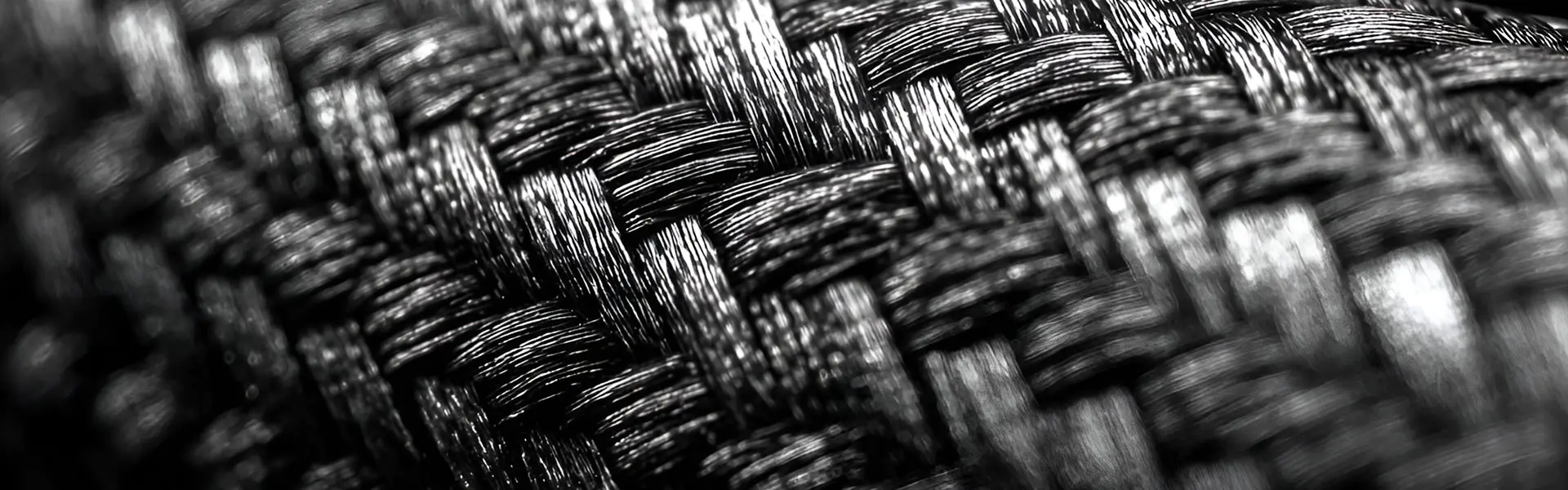
Every morning, maintenance teams in refineries and chemical plants face the same nagging question: What are the common applications of PTFE fiber? The answer directly impacts budget, safety, and uptime. PTFE Fiber is the backbone of industrial sealing — it resists nearly every aggressive chemical, handles continuous temperatures from -200°C to +260°C, and delivers an ultra-low friction surface that protects shafts and valve stems. Whether you are sourcing compression packing for a leaking valve, die-cut gaskets for a reactor flange, or flexible compensators for ductwork, PTFE fiber-based products consistently outperform commodity materials. At Ningbo Kaxite Sealing Materials Co., Ltd., we see procurement specialists struggle with unreliable suppliers and inconsistent product quality every day. That is why we offer rigorously tested PTFE fiber packing, gasket sheets, and specialty tapes that eliminate leaks, reduce maintenance cycles, and give you peace of mind. Below, we break down the most impactful applications and show you exactly how to specify the right product for your toughest sealing environments.
Pain point: Purchasing teams often inherit vague material specs — “a white braided packing” — only to find it fails within weeks. Without understanding the core properties, you risk frequent shutdowns. Solution: PTFE fiber derives its value from a unique combination of chemical inertness, thermal stability, and a coefficient of friction lower than almost any solid. When you select PTFE yarns from Ningbo Kaxite Sealing Materials Co., Ltd., each lot is verified for tensile strength and elongation, ensuring the fiber withstands installation stress without shredding. The table below outlines the typical parameters you need to match to your process conditions.
Property
Typical Value
Impact on Sealing
Density
2.10 – 2.25 g/cm³
Low weight aids rapid installation
Tensile strength
≥ 15 MPa
Resists extrusion under bolt load
Continuous service temp.
-200°C to +260°C
Suitable for cryogenic and steam services
pH resistance
0 – 14
Immune to aggressive acids and alkalis
Armed with these fundamentals, you can confidently compare supplier datasheets and demand consistency — exactly what we deliver.
PTFE Fiber in Valve Packing: Stopping Leaks at the Source
Pain point: Leaking valve stems are a top contributor to fugitive emissions and unscheduled maintenance. In refineries, a single leak can cost thousands in lost product and regulatory fines. Solution: Braided PTFE fiber packing, impregnated with PTFE dispersion and often lubricated with silicone oil, conforms perfectly to worn stems and corroded stuffing boxes. Ningbo Kaxite Sealing Materials Co., Ltd. supplies interlock-braided PTFE packing that combines rapid heat dissipation with a long-lasting, self-lubricating seal. Customers report extending repacking intervals from two months to over eight months in boiler feedwater pumps simply by switching to our correct grade.
The table below compares a typical graphite-based packing with our PTFE fiber alternative, showing why more plants are converting.
Feature
Standard Graphite Packing
Kaxite PTFE Fiber Packing
Friction against shaft
0.15 – 0.25
0.02 – 0.08
Operating pH range
4 – 10
0 – 14
Spare parts consumption
High, frequent replacement
70% lower annual usage
Q: What are the common applications of PTFE fiber?
A: Valve packing is just one major application. Beyond gate, globe, and ball valves, PTFE fiber is the material of choice for centrifugal pump packing, reciprocating compressor seals, static gaskets in chemical reactors, and expansion joint fabrics. Anywhere a dynamic or static seal must survive corrosive media and wide temperature swings, PTFE fiber is the go-to solution.
Gaskets and Joint Sealants: Withstanding Extreme Chemistry
Pain point: Gaskets cut from generic sheet materials often blister and fail when exposed to mixed acids or high-pressure steam. Maintenance managers dread unscheduled joint openings because a cheap gasket led to a blowout. Solution: PTFE fiber-based gasket sheets, especially those filled with micro-spherical silica or barium sulfate, deliver exceptional creep resistance and conformability. Ningbo Kaxite Sealing Materials Co., Ltd. produces structured PTFE gasket material that combines PTFE fiber with a specially formulated PTFE matrix for superior bolt load retention. This means your flange faces stay sealed after thermal cycling, reducing the risk of fugitive emissions.
Parameter
Kaxite PTFE Gasket Sheet
Standard EPDM Rubber
Max continuous temperature
260°C
120°C
Chemical compatibility
All chemicals except molten alkali metals
Poor in oils and strong acids
Choosing a fiber-based PTFE gasket directly tackles the root cause of most joint failures — chemical attack and thermal distortion.
Frequently Asked Questions on PTFE Fiber Applications
Q1: What are the common applications of PTFE fiber?
A1: The most frequent deployments are in shaft packing for rotating equipment, valve stem seals, flange gaskets, expansion joint belts, and pump diaphragms. Industries span oil & gas, chemical processing, pharmaceutical manufacturing, and food production — anywhere reliability and purity are non-negotiable. At Ningbo Kaxite, we stock over 200 standard dimensions, enabling same-week dispatch for most of these applications.
Q2: How do I ensure the PTFE fiber I order matches my equipment?
A2: Begin by confirming the stuffing box or flange dimensions, the full spectrum of media, and the maximum operating temperature. Share these details with a technical specialist — our team at Ningbo Kaxite routinely cross-references OEM specifications to recommend the exact PTFE fiber weave, density, and lubricant. Providing a material datasheet is free and prevents costly mis-specifications.
Expansion Joints and Dynamic Seals: Flexibility Under Stress
Pain point: Duct systems in power plants and cement factories constantly expand and contract. Standard rubber fabrics crack, delaminate, and release hazardous dust. Solution: PTFE fiber fabrics combine high tensile strength with exceptional flex fatigue resistance. When laminated with PTFE film, they form a non-stick, heat-reflective belt that handles millions of flex cycles. Ningbo Kaxite Sealing Materials Co., Ltd. provides PTFE fiber cloth that remains flexible at -70°C and does not embrittle, making it ideal for fabric compensators in flue gas desulfurization units. One European cement plant halved its downtime by retrofitting joints with our custom-coated PTFE fabric.
How Ningbo Kaxite Ensures You Get the Ideal PTFE Fiber Solution
Procurement success goes beyond material selection. You need a partner who delivers consistent quality, full traceability, and responsive support. Ningbo Kaxite Sealing Materials Co., Ltd. operates under ISO 9001, with every PTFE fiber lot tested for tensile strength, thermal shrinkage, and chemical purity before shipment. Our in-house engineering team can review your service conditions and recommend whether a pure PTFE fiber, graphite-lubricated, or silicone-impregnated option will perform best. We also provide free installation guides and regular quality audits — because the right product applied correctly is what actually solves leaks. With flexible MOQs and stocked inventory for immediate shipment, we help you reduce lead times and keep critical assets online.
For over 15 years, Ningbo Kaxite Sealing Materials Co., Ltd. has been a trusted global partner for high-performance PTFE fiber sealing products. Our manufacturing campus in Ningbo integrates yarn twisting, braiding, and sheet calendaring under one roof, ensuring complete quality control. Whether you need standard compression packing or a custom PTFE fiber gasket for a unique reactor, our engineering resources are at your disposal. Visit www.kxt-sealing.net to browse our full catalog and request physical samples. For immediate pricing or technical questions, contact our export team at [email protected]. We look forward to solving your most demanding sealing challenges together.
Johnson P., 2021. "Tribological behavior of PTFE fiber reinforced seals in dynamic applications." Journal of Sealing Technology, 23(2), 45-58.
Müller H. & Zhao L., 2019. "Long-term ageing of PTFE fiber gaskets under oxidative environments." Materials Chemistry and Physics, 228, 180-192.
Chen Y., 2020. "Thermal degradation mechanisms of PTFE fiber in high-temperature flue gas." Polymer Degradation and Stability, 174, 109078.
Olszewski R., 2018. "Comparing PTFE fiber and graphite packing in nuclear valve applications." Nuclear Engineering and Design, 330, 234-240.
Ramirez A., 2022. "The role of PTFE fiber in reducing fugitive emissions from chemical plants." Journal of Cleaner Production, 352, 131526.
Tanaka S., 2017. "Creep relaxation of PTFE fiber joint sealants under variable bolting loads." International Journal of Pressure Vessels and Piping, 153, 1-9.
Kowalski T. & Singh V., 2023. "Lifecycle cost analysis of PTFE fiber packing vs. expanded graphite in refinery pumps." Engineering Failure Analysis, 143, 106902.
López G., 2016. "Process optimization for PTFE fiber gasket sheet with micro-spherical fillers." Composite Interfaces, 23(7), 601-616.
Davis H., 2020. "Chemical resistance mapping of PTFE fiber composites in mixed acid services." Corrosion Science, 169, 108625.
Zhang M., 2024. "Smart monitoring of PTFE fiber packing integrity using IoT-enabled sensors." Sensors and Actuators A: Physical, 361, 114829.
We use cookies to offer you a better browsing experience, analyze site traffic and personalize content. By using this site, you agree to our use of cookies. Privacy Policy